Understanding DDoS Protection
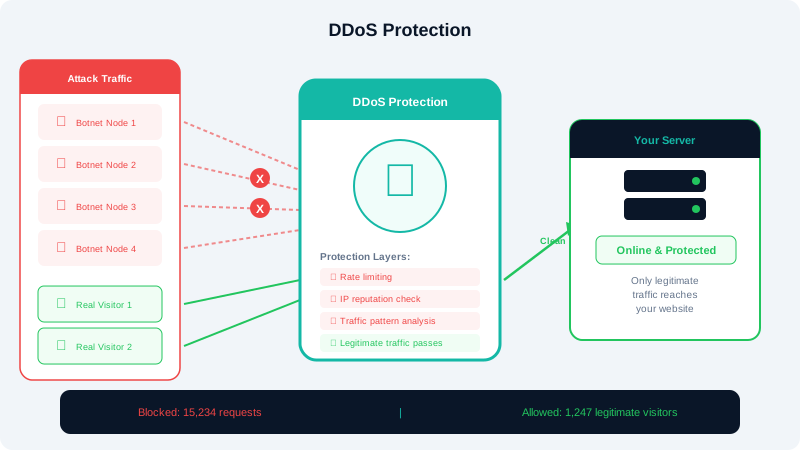
A Distributed Denial of Service (DDoS) attack occurs when a large number of compromised systems flood your server with traffic, overwhelming its resources and making your website unavailable to legitimate visitors. DDoS attacks are one of the most common threats facing websites today, and understanding how they work helps you stay prepared.
Types of DDoS Attacks
DDoS attacks generally fall into three categories:
Volumetric attacks are the most common type. They aim to saturate your server's bandwidth by sending massive amounts of data. Examples include UDP floods and DNS amplification attacks. These attacks are measured in gigabits per second (Gbps).
Protocol attacks exploit weaknesses in network protocols to consume server resources. SYN floods and ping of death attacks fall into this category. They target firewalls, load balancers, and the server's connection state tables.
Application layer attacks are the most sophisticated. They target specific web applications with seemingly legitimate requests designed to exhaust server resources. HTTP floods and slow POST attacks are common examples. These are harder to detect because the traffic looks similar to normal user behavior.
How CyclebreezeHost Mitigates DDoS Attacks
CyclebreezeHost employs multiple layers of protection to defend your website:
- Network-level filtering: Our upstream providers monitor traffic patterns and filter malicious traffic before it reaches our network. This stops large volumetric attacks at the edge.
- Hardware firewalls: Enterprise-grade firewalls inspect incoming traffic and block known attack signatures in real time.
- Rate limiting: Our servers enforce connection rate limits to prevent individual IP addresses from overwhelming your resources.
- Traffic analysis: Automated systems detect unusual traffic spikes and can apply temporary rules to mitigate ongoing attacks without disrupting legitimate visitors.
These protections are included with all hosting plans at no additional cost.
What to Do During an Attack
If you notice your website is slow or unresponsive and suspect a DDoS attack:
- Do not panic. Our automated systems are likely already working to mitigate the attack.
- Open a support ticket immediately with the subject line "Possible DDoS Attack" and include your domain name. Our team will investigate and apply targeted mitigation rules if needed.
- Check your access logs in cPanel under Metrics > Raw Access to identify suspicious traffic patterns.
- Avoid making changes to your server configuration during an active attack, as this can interfere with mitigation efforts.
Additional Protection Tips
For websites that require enhanced protection, consider these additional measures:
- Use Cloudflare: Placing your site behind Cloudflare adds a global CDN and advanced DDoS protection layer. CyclebreezeHost is compatible with Cloudflare's free and paid plans.
- Enable rate limiting: Configure rate limiting rules in Cloudflare or your
.htaccessfile to throttle excessive requests from individual IP addresses. - Block suspicious regions: If your audience is localized, use firewall rules to block traffic from regions where you have no visitors.
- Keep software updated: Outdated CMS installations and plugins can be exploited in application layer attacks. Regular updates close known vulnerabilities.
Our support team monitors the network around the clock and is ready to assist you with any security concerns.